

"Is This Normal?” Common Parenting Worries That Live Rent-Free in a Mom’s Brain
TLDR:
If you’re often asking yourself “Is this normal?” you’re probably carrying more pressure than you realize. Many childhood behaviors fall within typical development, but the anxiety around them can be overwhelming. Therapy can help moms calm the constant worry, trust their instincts, and feel steadier in motherhood.
_________________________________________________________________________________________________
There is a question I hear over and over again in my work as a therapist for moms.
Sometimes it’s asked out loud.
More often, it’s whispered late at night after the house is finally quiet.
Is this normal?
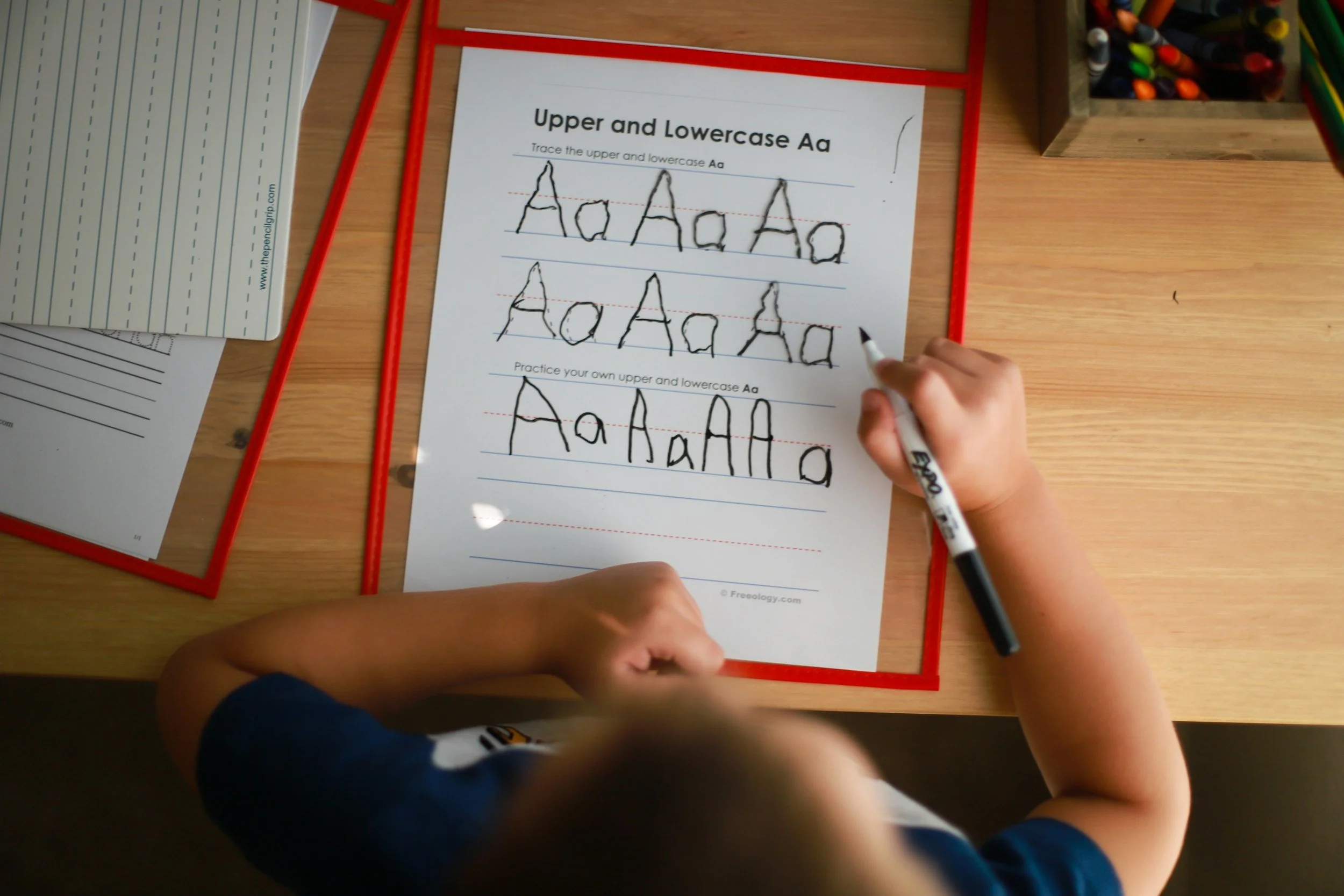
Is it normal that my kindergartener still writes some of his numbers backwards?
Is it normal that my child lies about brushing his teeth, even though he never gets in trouble for it?
Is it normal that bedtime feels like a battle every night?
Is it normal that I feel anxious even when nothing is technically “wrong”?
These questions don’t usually come from big, dramatic moments. They come from the everyday parts of motherhood, the quiet moments where you wonder if you’re missing something important.
As a therapist in Ohio who works closely with overwhelmed mothers, I see how often this question carries much more weight than it appears on the surface.
The Quiet Weight of “Is This Normal?”
Modern motherhood asks moms to do an impossible amount of internal monitoring.
You’re expected to notice everything.
Track development.
Watch for red flags.
Advocate early.
Stay calm.
And somehow enjoy the process at the same time. Ha.
So when something feels slightly off, your brain goes into high alert.
What if this means something more?
What if I wait too long?
What if I mess this up?
For many moms, “Is this normal?” is really asking, Am I failing my child without realizing it?
That kind of pressure alone is enough to make you want to crawl under the covers.
Early Childhood Behaviors That Trigger So Much Anxiety
Writing letters or numbers backwards
One of the most common worries I hear from moms with young children is about writing reversals.
A five- or six-year-old flipping numbers, reversing letters like b and d, or struggling with spacing can feel alarming, especially when kindergarten already feels high-pressure.
For many children, these reversals fall within typical early learning development. Young brains are still building spatial awareness, fine motor coordination, and visual processing skills.
What matters most is not perfection, but gradual growth over time.
Yet even knowing this, many moms still lie awake worrying. Because understanding something logically does not always calm anxiety emotionally.
Lying about small things
“I asked if he brushed his teeth and he said yes, but he didn’t.”
“She lies to get out of things even though she knows she won’t be in trouble.”
These moments can feel unsettling. Moms worry about honesty, integrity, and whether these behaviors signal something deeper.
In early childhood, lying is often about avoidance, imagination, or testing independence rather than moral failure. Kids are learning how the world works and how much control they have within it.
Still, when you are already mentally exhausted, even small lies can feel heavy.
Big emotions over seemingly small things
Many moms ask why their child can handle big changes but melts down over socks, shoes, or transitions at home.
Children’s nervous systems are still developing. Many hold it together all day and release their emotions where they feel safest. Sensory sensitivities, hunger, fatigue, and transitions can all play a role.
None of this automatically means something is “wrong.” But it can feel overwhelming when you’re the one absorbing it daily.
Why Moms Carry This Question So Heavily
Most moms are not asking “Is this normal?” because they are overreacting. They are asking because they are already carrying so dang much.
Many moms I support through therapy are managing:
Mental load
Anxiety
Perfectionism
Past criticism or shame
Pressure to parent “correctly”, especially in a world where social media portrays "perfect" people.
Constant comparison
Very little real rest
When your nervous system is stretched thin, uncertainty feels unbearable.
Your brain wants reassurance. Certainty. Answers.
Parenting rarely provides those.
When Googling Makes It Worse
Many moms try to soothe themselves by researching. (I am guilty of this!)
They Google.
They scroll parenting forums.
They ask social media groups.
Sometimes this helps. Often, it increases anxiety.
Reassurance seeking can calm anxiety briefly, but it doesn’t teach your nervous system how to tolerate uncertainty. So the cycle repeats.
This isn’t a personal failure. It’s a sign your system is overloaded.
The Cost of Constant Monitoring
Living in a state of constant evaluation quietly drains moms.
It keeps you on edge.
It makes parenting feel tense.
It steals joy from neutral moments.
It erodes confidence over time.
Many moms tell me they don’t trust themselves anymore. They worry they’re either missing something important or making too big a deal out of nothing.
That limbo is exhausting.
A More Grounding Way to Approach the Question
Instead of asking “Is this normal?” over and over, try gently shifting the question.
Is my child safe and supported right now?
Is this significantly interfering with daily life?
Does this happen across many settings or mostly at home?
Am I reacting to what I’m seeing or to fear about the future?
These questions help ground you in the present moment, where parenting actually lives.
Trusting Yourself Without Ignoring Concerns
It is okay to ask teachers and pediatricians questions.
It is okay to seek extra information when needed.
It is also okay to simply pause.
Children develop unevenly. They grow in spurts. They regress. They catch up.
You can trust yourself without panicking.
When the Anxiety Becomes the Hardest Part
Sometimes the biggest struggle isn’t your child’s behavior. It’s the anxiety surrounding it.
If you notice that you:
Are constantly scanning for problems
Replay interactions repeatedly
Struggle to relax even when things are fine
Feel overwhelmed by uncertainty
That is often a sign your nervous system needs support.
This is where mental health support for burnout can be life-changing, not because something is wrong with your child, but because motherhood has demanded too much from you for too long.
Therapy Is Support for You, Not a Judgment
As a therapist for moms in Columbus, Ohio, I want to say this clearly.
Therapy is not about fixing your parenting. It’s about helping you feel steadier, calmer, and more confident inside yourself.
Through therapy intensives, EMDR intensives, and ongoing support, many moms experience relief from constant anxiety, overthinking, and self-doubt. Therapy intensives and EMDR intensives can be especially helpful for moms who feel stuck in cycles of burnout and overwhelm.
When moms feel regulated, parenting naturally feels more manageable.
Final Thoughts
Asking "is it normal" is not a weakness.
It’s love mixed with pressure.
With the right support, it is possible to feel calmer, trust yourself again, and respond to your child without constant fear.
If you’re looking for therapy in Columbus, Ohio, or support from a therapist in Ohio who understands the mental load of motherhood, I am here.
>>>>>>>>>>>>>>>>>>>>>>>>>>>>>>>>>>>>>>>>>>>>>
✨ Not sure if you’re burned out or just tired?
Take my quick Burnout Quiz for Moms to find out where you are on the burnout spectrum and what kind of support might help you feel more grounded again.
It only takes a few minutes and it’s a gentle first step toward feeling lighter and more like yourself.
👉Click here
